Filter By
Brand
Brand
Price
Price
€36.00 - €208.00
SELECT ROD LENGTH
SELECT ROD LENGTH
Two-Piece Match Rods
Category introduction
Two-Piece Match Rods are match fishing rods built in two pieces to deliver a consistent action and practical transportability. This category includes classic 2‑section match rods, pellet waggler specific rods, light match models with high tip sensitivity, and reinforced versions for heavier work. These rods are designed for use with wagglers, pellet wagglers and sliding floats in venues such as lakes, quarries and canals.
They suit beginners seeking a reliable, easy‑to‑use rod, experienced anglers who demand precision and feedback on the float, and competitors who need repeatable performance. Typical uses include float fishing with fixed or sliding rigs, distance casts with wagglers, and controlled fights against strong fish.
Main features
Construction and materials
2‑section match rods are built to balance lightness and responsiveness. Blanks commonly employ carbon of varying modulus to achieve sensitivity and strength. The two‑piece design eases transport and storage while maintaining the blank’s action characteristics.
Action and sensitivity
Action is crucial: progressive or semi‑parabolic actions help present floats of varied weights naturally, while faster actions give immediate strike feel and control. The tip’s sensitivity helps detect subtle takes and transmits the strike to the angler.
Guides and line flow
Guides arranged to minimize friction and twist improve line flow, especially important when using fine monofilament or thin braided lines for long casts. Proper guide layout enhances casting accuracy and reduces birdnest risk.
Ergonomics and handling
Ergonomic handles improve comfort during long sessions; a well balanced rod reduces fatigue and makes it easier to manage long spells of fishing or extended fights.
Durability and robustness
Reinforced models are built to endure higher stresses and frequent use typical of carp fisheries or heavy‑tackle scenarios. Durability depends on blank quality, components and assembly precision.
How to choose Two-Piece Match Rods
Match the action to float weight
Choose rod action according to the weights of the floats you plan to use: softer actions for light floats and natural presentations; stiffer actions for pellet wagglers and long casts where control and power are needed.
Select length for the fishing environment
Rod length influences casting range and line control. Shorter rods are practical for narrow canals and close quarters; longer rods better suit lakes and quarries where distance is required.
Consider power and responsiveness
Power should align with target species and rigging: higher power for pellet waggler setups and robust fish, greater finesse for chub, bleak and other light targets.
Check compatibility with reel and line
Ensure the guide configuration and reel seat accommodate your reel size and the line diameters you intend to use. A well matched setup improves cast stability and consistency.
Competition vs recreational use
Competitors prioritize consistent castability and repeatable performance; recreational anglers may prefer comfort and versatility. Two‑piece construction needs to deliver sufficient stiffness even in competitive contexts.
Available types
- 2‑Section Match — versatile rods for waggler fishing and mid‑range distance.
- 2‑Section Pellet Waggler — designed for extra casting power and control when using pellet wagglers.
- Light Match — maximized tip sensitivity for cautious fish and light rigs.
- Reinforced models — stronger build for heavy use and fighting larger fish.
Compatible techniques
These rods are ideal for traditional match float fishing with fixed or sliding rigs, waggler and pellet waggler techniques, distance presentations and situations requiring precise float control in lakes, quarries and canals.
Recommended target species
- Carp (particularly with pellet waggler and reinforced rods)
- Chub
- Bleak
- Bream and other match species in still waters
Comparative table
| Feature | Use | Benefit | Recommended angler |
|---|---|---|---|
| Light Match | Light rigs, wary fish | High sensitivity and quick response | Beginners seeking finesse and competitors on small fish |
| Pellet Waggler 2‑section | Pellet waggler, carp | Extra casting power and control | Anglers fishing carp fisheries and pellet tactics |
| Match 2‑section | Waggler, mid‑range distance | Balanced precision and power | Versatile anglers and competitors |
| Reinforced | Heavy fishing situations | Increased durability and strength | Anglers targeting bigger fish or intensive use |
Why choose Two-Piece Match Rods
Two‑section match rods provide a blend of technical performance and practicality: they deliver a smooth action curve, precise casting and sensitive bite detection while simplifying transport and setup. For anglers seeking reliable, repeatable performance in match float fishing—whether recreational or competitive—these rods offer the necessary balance of sensitivity, power and durability.
Two-Piece Match Rods
Active filters
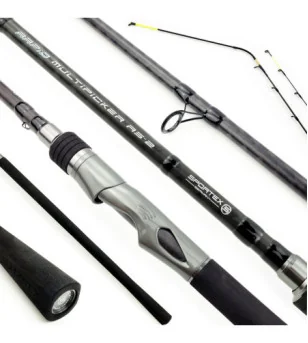
SPORTEX RAPID MULTIPICKER RS-2
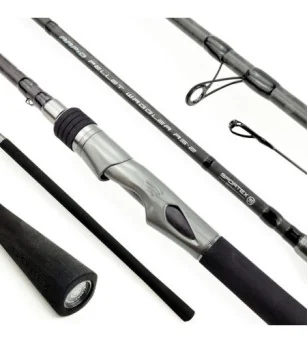
SPORTEX RAPID PELLET WAGLER RS-2
Buying Guide
Choosing the right two-section match rod means balancing sensitivity, casting precision and portability. Match rods are designed for float and light feeder work where presentation and subtle strike detection are critical. Two-section designs make transport easier and often alter action compared to one-piece rods, so focus on how the rod’s length, action and build align with the type of match fishing you do—canal, stillwater or open river. This guide breaks down the technical factors to consider so you can pick a rod that improves bite detection, casting consistency and comfort during long sessions.
Rod Length
Length directly affects casting reach, line control and the rod’s leverage. Shorter match rods (2.7–3.6 m / ~9–12 ft) are easier to control for precise short-to-medium casts and tight-quarters fishing. Longer rods (3.9–4.5 m / ~13–15 ft) help with long-range presentation and keeping line off the water but require more skill to manage in wind and tight pegs. Choose a length that suits typical peg layouts and target species.
Action and Power
Action describes how a rod bends under load. Match rods commonly range from fast to parabolic. A fast action concentrates bend near the tip for quick, accurate casts and instant hooksets; a parabolic action bends deeper into the blank offering better fish-fighting cushioning and line control. Power (light, medium-light, medium) indicates how much load is needed to flex the rod—lighter power is ideal for small bream and roach, medium power for larger carp or mixed venues. Match the action and power to float size and expected fish.
Blank Material and Construction
Modern match rods use graphite, carbon composite or blended blanks. Higher modulus carbon gives sensitivity and low weight, improving bite detection and reducing angler fatigue. Composite blends can add durability and a softer recovery. For two-section rods, pay attention to joint design—well-engineered ferrules preserve action and avoid “dead” zones where vibration dampens.
Two-Section Design and Ferrules
Two-section rods prioritize portability but the connection affects action and sensitivity. Look for precision ferrules that align cleanly and lock securely. Some designs feature reinforced spigots or overlapping joints to maintain blank continuity. Test or read detailed specs about joint stiffness—poor ferrules can create play and reduce tip recovery.
Handle, Grip and Reel Seat
Handles vary from full cork to split cork or EVA. Full cork gives classic feel and comfort for long sessions, while split handles reduce weight and often suit reels positioned closer to the blank. Ensure the reel seat is robust and compatible with the reel sizes you use; match fishing often uses fixed-spool reels, so check foot fitting and clearance for float control lines.
Guides and Tip Top
Guides influence line flow, casting smoothness and friction. Lightweight SiC or ceramic-lined guides reduce wear and allow braided or coated lines to run freely. The tip top should be slim and strong—match fishing relies on a responsive tip, so a delicate yet durable tip guide preserves sensitivity and reduces breakage risk on hook-ups.
Balance and Overall Weight
Balance affects comfort and fatigue during long days. A well-balanced rod places the center of gravity near your hand and feels lighter in action than an unbalanced heavier blank. Consider the overall weight combined with reel and float rig; lighter setups help maintain steady hands and better bite detection.
Rig Compatibility and Use Case
Consider the rigs you plan to use: long-pole style floats, Avon floats, waggler or leger rigs demand different tip sensitivity and butt power. Two-section match rods are versatile but ensure the model you choose supports the float types and line strengths common to your venue.
Comparison Table
| Type | Typical Use | Key Features | Who It Suits |
|---|---|---|---|
| Short Two-Section Match Rod | Short-range canals, tight pegs | Compact length, quick tip response, easy control | Anglers needing precision in confined waters |
| Standard Two-Section Match Rod | General stillwater and river margin fishing | Balanced action, mid-range casting, versatile | All-round anglers seeking a versatile match rod |
| Long Two-Section Match Rod | Open water, long-range float work | Extended reach, parabolic options for fish control | Competitors and anglers fishing long casts |
| Light-Power Two-Section Rod | Small roach, perch and bream with light tackle | Highly sensitive tip, low power, lightweight blank | Those targeting small species with delicate presentation |
| Medium-Power Two-Section Rod | Mixed venues with larger fish (carp, barbel) | Stronger butt, higher backbone, controlled fighting | Anglers who need extra lifting power and robustness |
Expert Tips
- Match rod action is best judged with line and float fitted—test with your typical rig to feel real-world performance.
- Prefer rods with well-machined ferrules; a snug, aligned joint preserves sensitivity and prevents tip bounce.
- Choose guide spacing and size appropriate for your line type; thin braided lines benefit from smaller, smooth guides.
- When possible, handle rods before buying to assess balance and grip comfort—what feels light in spec can feel different with reel attached.
- For multi-venue use, select a versatile length and medium-light power to cover most match situations without swapping rods.
- Inspect the tip top and first guide for reinforcement—these are the highest stress points when hooking larger fish.
- Consider spare spigots or protective tube storage if you travel frequently; two-section rods are portable but need protection in transit.
- Match your rod to float size—heavier floats require more backbone for proper casting and control.
Frequently Asked Questions
What is the advantage of a two-section match rod over a one-piece?
Two-section rods are far more convenient to transport and store, and they make travel to distant pegs easier. Modern joint designs minimize differences in action; when well made, a two-section rod can perform nearly as well as a one-piece while adding portability.
How do I choose the right action for match fishing?
Fast action suits anglers who prioritise casting accuracy and quick hooksets, while parabolic action helps control runs and offers more cushioning for long fights. Consider the species you target and the floats you use—heavier tackle pairs well with faster actions, delicate rigs benefit from softer actions.
Does blank material really matter?
Yes. Carbon and graphite blanks provide sensitivity and lightweight performance, improving bite detection. Composite blanks can increase durability and a softer feel. Choose based on your need for sensitivity versus resilience.
Are two-section rods less sensitive?
Not necessarily. High-quality ferrules preserve blank continuity and maintain sensitivity. Lower-quality joints can introduce dead spots, so inspect ferrule fit and alignment before buying.
What length is best for competition match fishing?
Many competitors prefer lengths between 3.9 and 4.5 m for long-range float control, but the best length depends on peg layout and venue. Versatility often wins—choose a length that covers most of your typical fishing spots.
How should I maintain my match rod?
Rinse after salt exposure, wipe down blanks and guides, and store rods in protective tubes. Check and lightly grease metal ferrules if recommended by the manufacturer to prevent corrosion and ensure smooth assembly.
Can I use a match rod for light feeder work?
Yes, many match rods overlap into light feeder territory, especially those with stronger butt sections. Match rods excel at presentation-focused fishing, while dedicated feeders offer heavier casting performance for bulked baits.
What reel size pairs well with match rods?
Small to medium fixed-spool reels are typical—choose a size that balances with the rod and can hold the line capacity you need. Balance and comfort while holding the rod are more important than large spool capacity for most match rigs.
Related Categories
Why buy from Pescare.it
Pescare.it specialises in fishing gear and offers a carefully selected range of match rods and accessories. The catalogue focuses on models suited to practical match and day fishing needs, backed by product descriptions and technical detail to help you choose. Customer support with fishing knowledge is available to assist with selection and setup questions.
Conclusion
Choosing the right two-section match rod means matching length, action, and build to your venue, target species and preferred rigs. Prioritise a rod with quality ferrules, a balanced feel and guides suited to your line type. Use the comparison table and expert tips here to narrow options and make a confident purchase. Explore the available rods, test the balance and action where possible, and gear up for better presentation and more consistent bites.